

On Living With Things Longer
Nothing Accidental - Volume III - Selection, restraint, and the spaces that endure

There is a growing impatience in the way people design homes.
Spaces are expected to feel complete immediately.
Perfect from the moment they are photographed.
Materials are selected for impact.
Furniture for novelty.
Objects for how they appear on screens that flatten everything into the same scale.
And increasingly, homes are consumed the way content is consumed.
Quickly.
Seen.
Admired.
Replaced.But the most memorable interiors rarely reveal themselves all at once.
They tend to deepen over time.
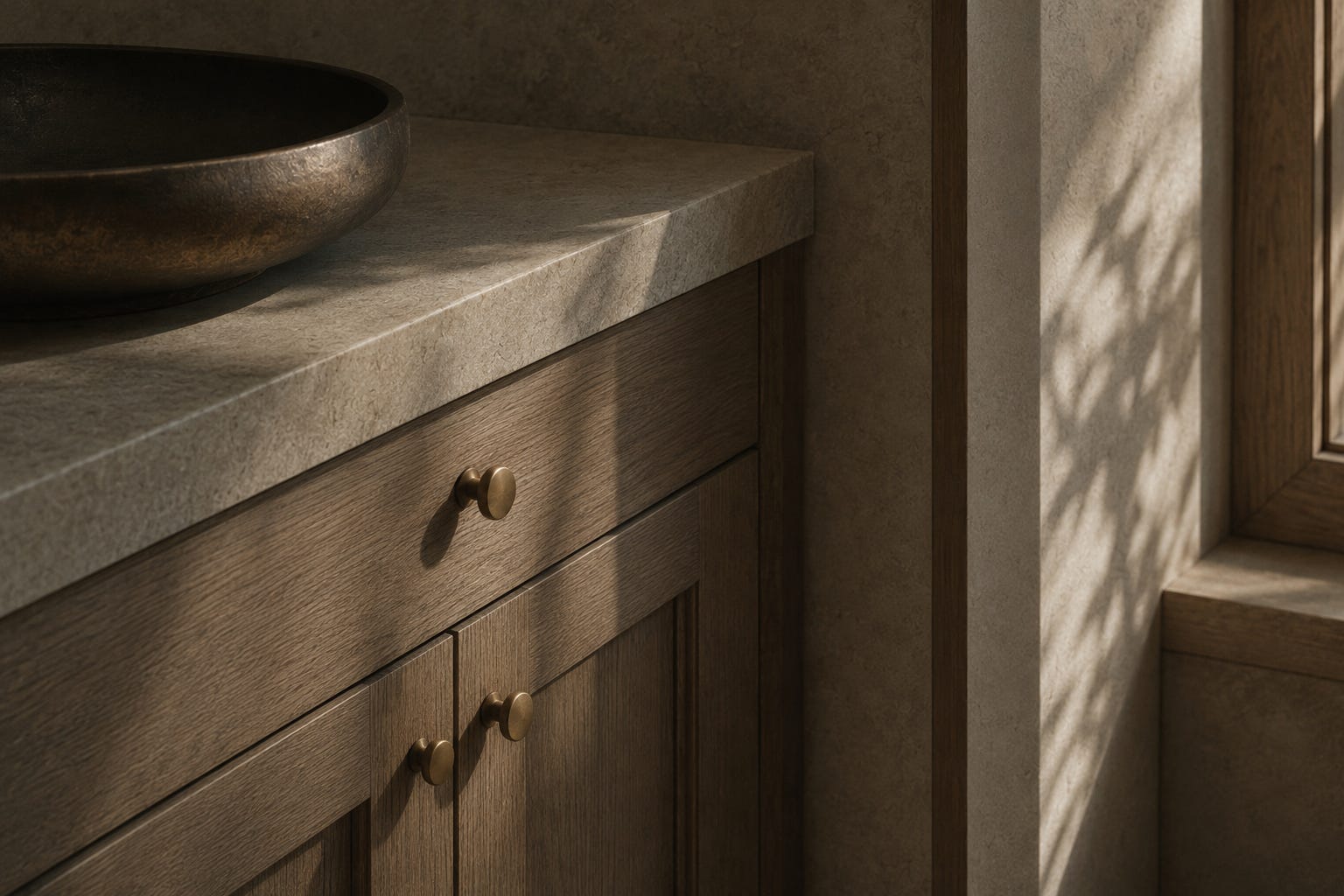
We’ve seen homes where the materials felt almost too restrained at first — unlacquered brass that looked severe when installed, oak cabinetry that seemed overly quiet, limestone that appeared flat in early light.
A year later, those same spaces felt entirely different.
Softer.
More settled.
More like themselves.
That change is difficult to manufacture intentionally.
It only happens through use.
Some materials become more beautiful because they stop trying to stay untouched.
Bronze patinas where it is handled most often.
Floors wear unevenly near kitchen islands.
Stone develops marks that would have felt unacceptable on day one and somehow essential a few years later.
These are not imperfections in the material.
They are evidence that someone actually lived there.
And good homes should feel lived in.
There is a tendency now to associate luxury with pristine permanence — untouched finishes, perfect continuity, surfaces that never change.
But permanence is not sterility.
Some of the most compelling homes feel slightly unresolved in the best possible way. Not incomplete. Just human.
Things move.
Books accumulate.
Materials age differently than expected.
The atmosphere becomes less controlled over time, not more.
Usually that makes the home better.The best interiors are not designed only for first impressions.
They are designed for endurance.
Not simply structurally, but emotionally.
To live well in a space for years requires something different than creating a space that photographs well for a moment.
Comfort matters more.
Restraint matters more.
Materials matter more.
The question becomes less:
“Will this look impressive?”
And more:
“Will this still feel honest ten years from now?”
Most spaces are not designed with that question in mind.
Timeless homes are often difficult to define because very little about them is trying aggressively to signal a specific moment.
They rely on proportion.
Consistency.
Material intelligence.
Nothing competing unnecessarily for attention.
You can usually tell within a few seconds whether a home was designed around materials or around images.
The difference is subtle, but it changes the feeling of the entire space.
There is something increasingly appealing about homes designed to age gracefully.
Not optimised for novelty.
Not dependent on constant updating.
Simply built to absorb life slowly over time.
To wear in instead of wear out.
Maybe this is what people are actually searching for when they talk about timelessness.
Not perfection.
Just continuity.
The feeling that a home becomes more like itself over time, rather than less.
— Cameron Varner
Banbury Lane Design Centre