

Nothing Accidental
Nothing Accidental — Volume I - On the details that quietly define a home
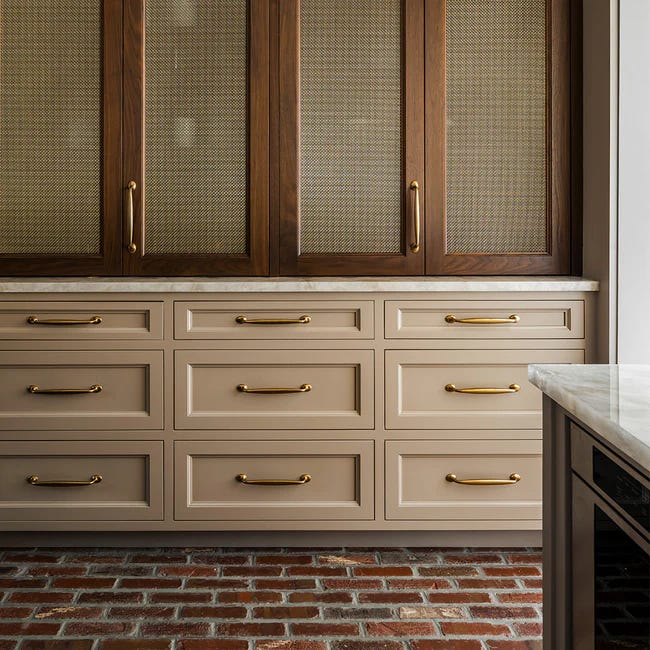
There is a particular kind of silence in a well-designed home.
Not emptiness.
Something quieter than that.
A quieter kind of confidence.
You feel it before you understand it.
The proportions are resolved.
The materials feel honest.
Nothing competes for attention, yet everything appears considered.
The best homes rarely announce themselves immediately. They unfold slowly.
And almost always, the difference lives in the details.
Not the decorative ones.
The tactile ones.
The weight of a door lever.
The sound of a latch engaging.
The slight resistance of a cabinet closing properly.
These are small interactions, repeated daily, that quietly shape our perception of quality.
Yet hardware remains one of the most underestimated elements in residential design.
Perhaps because it exists so close to the human hand that people stop seeing it altogether.
But that proximity is exactly what gives it importance.
Architecture is experienced physically long before it is understood intellectually.
A space can photograph beautifully and still feel unresolved in person. Conversely, some interiors possess a depth and permanence that cannot fully be captured in images at all.
Often, what separates the two is material intelligence.
Not extravagance.
Not scale.
Not trend.
Judgment.
The most refined designers tend to approach hardware the way architects approach proportion: carefully, quietly, and from the very beginning.
Because hardware is not applied decoration. It is part of the architecture itself.
A poorly scaled pull can flatten an otherwise beautiful kitchen.
An overly polished finish can disrupt the restraint of a room.
A lightweight handle can make a solid wood door feel unexpectedly insubstantial.
These decisions carry more visual and emotional weight than their size would suggest.
And unlike many design elements, they are experienced constantly.
Over time, people forget the novelty of spaces. What remains is how those spaces made them feel to live in.
That feeling is built through repetition.
Through touch.
Through consistency.
Through details that continue to reveal themselves long after first impressions disappear.
The homes that endure are rarely the ones chasing attention.
They are the ones where nothing feels accidental.
Cameron Varner
Banbury Lane Design Centre
Thoughts on architectural hardware, materiality, and considered homes.